
The light stays the same. Your eyes change.
A tritium light glows just as brightly all the time. Yet it looks paler right after you switch off the lights than after a while in the dark. The difference is in your eyes, which need 20 to 30 minutes to adjust.

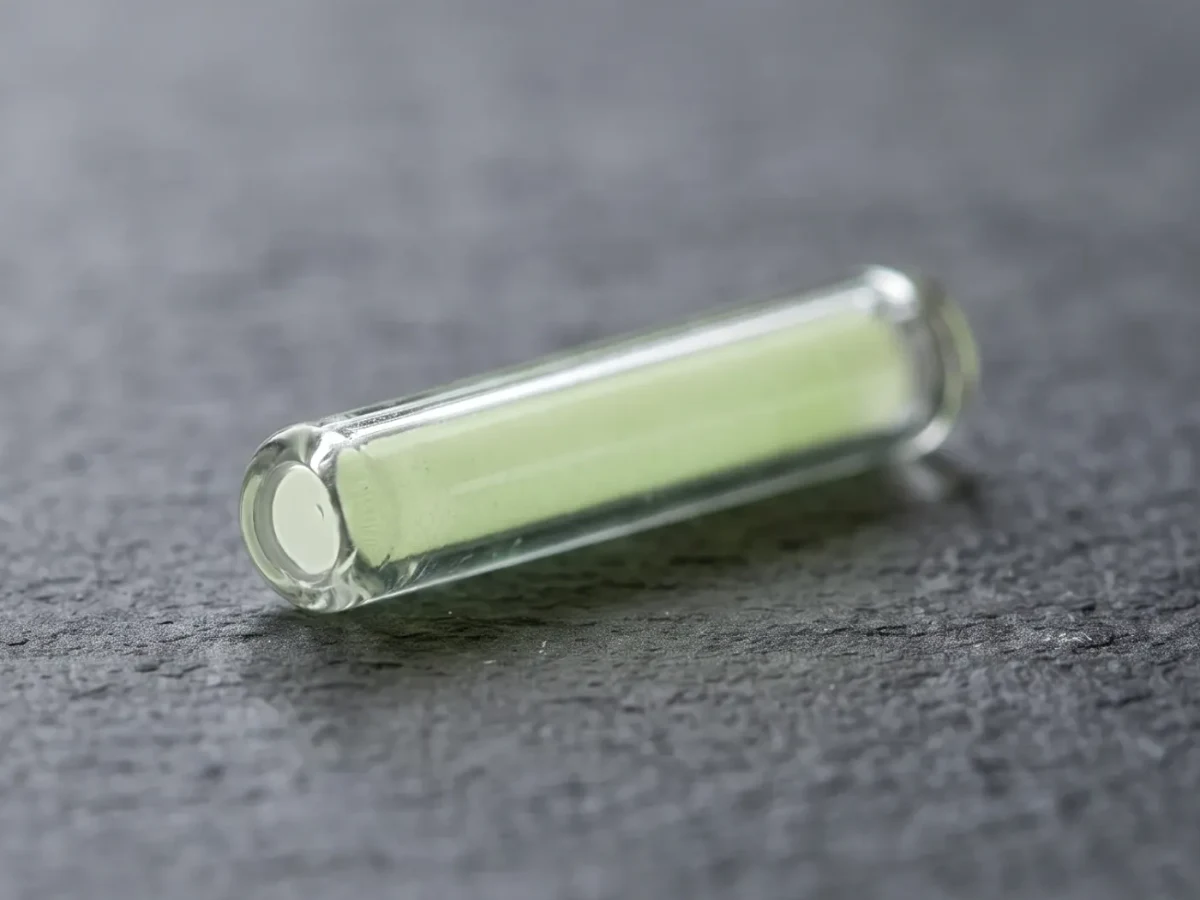
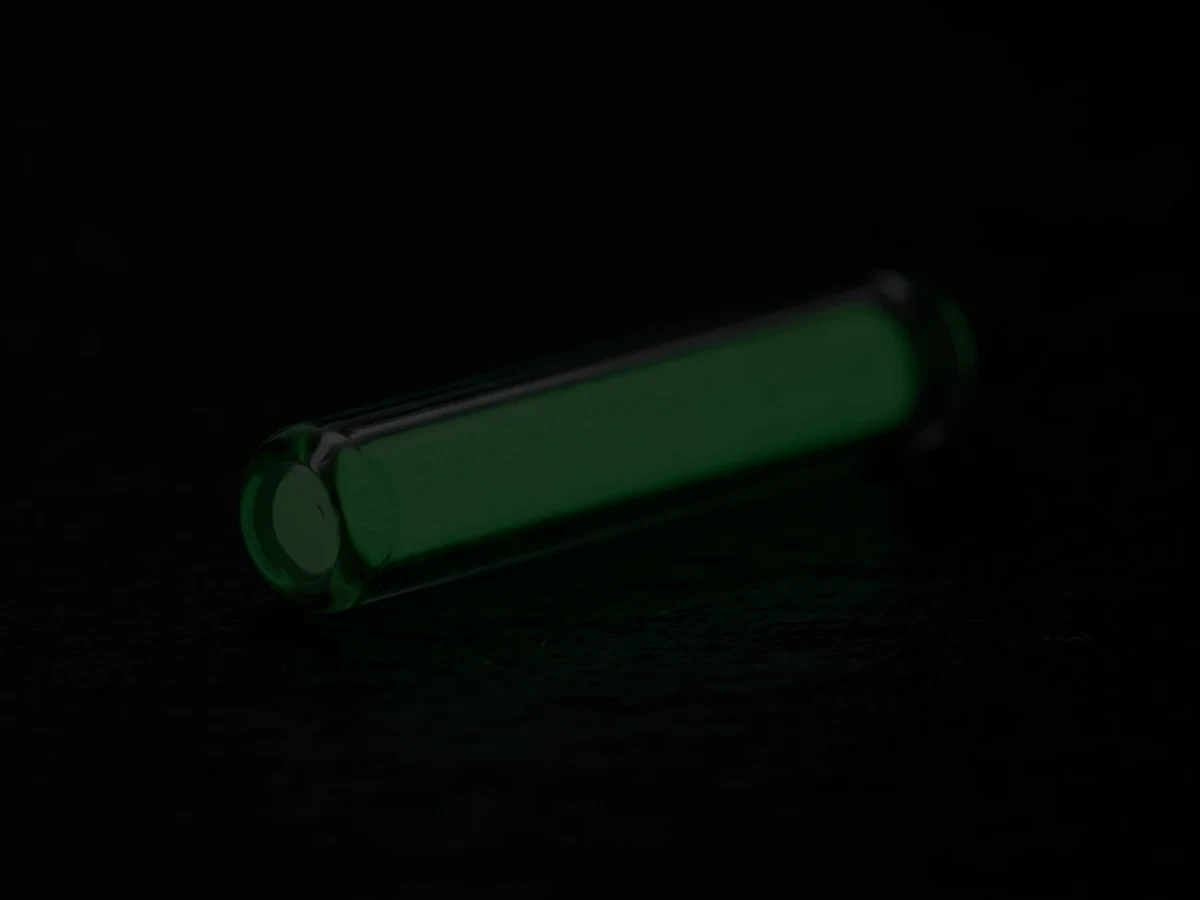
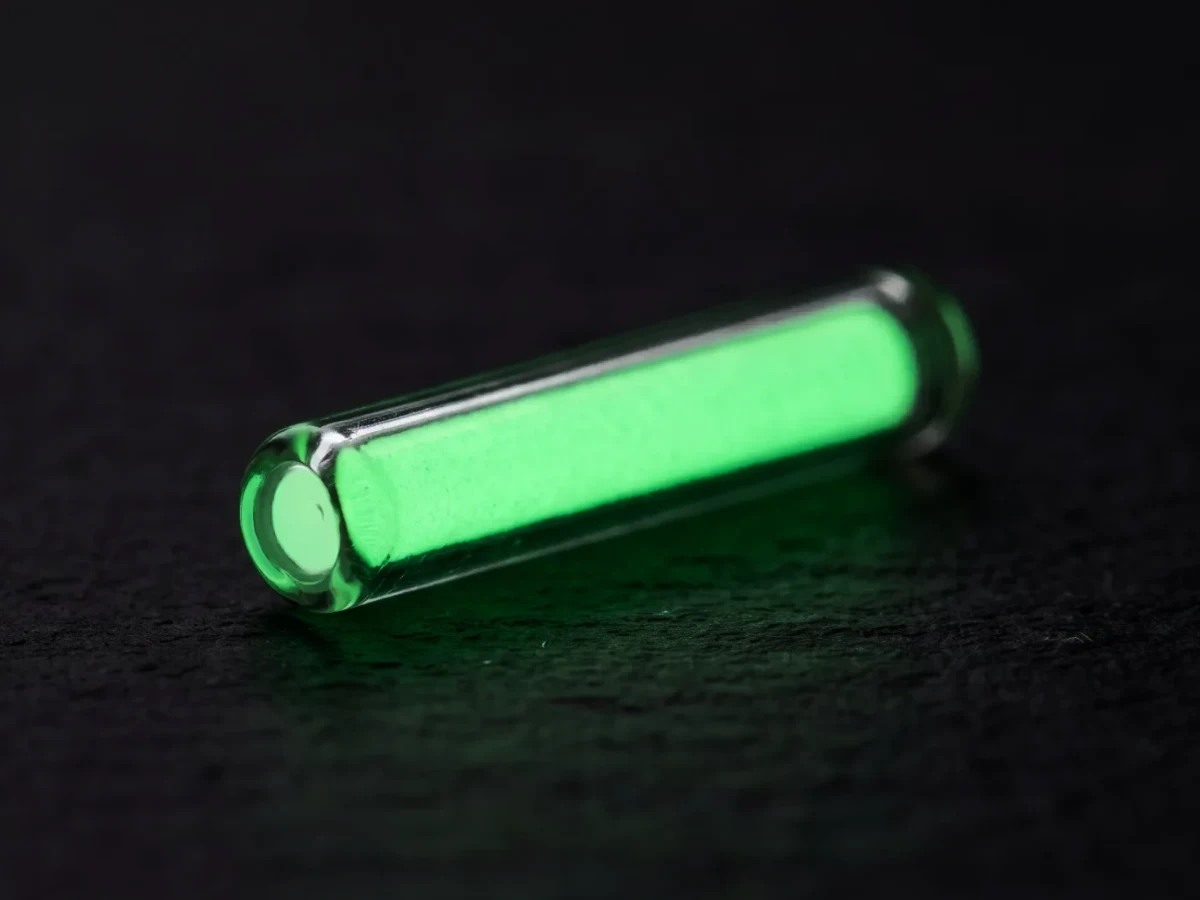
Same capsule, three moments
Photo
Lights on
The room is much brighter than the capsule, so the glow is barely visible.
Simulated view
Just switched off
Your eyes are still set for the bright room, so the glow looks paler than it is.
Simulated view
After 20 to 30 minutes
The same light, but now your eyes are ready. The glow is clear and bright.
The capsule glows exactly as brightly in all three pictures. Between the second and the third, only your eyes change.
Pictures 2 and 3 are the same photo, edited to show roughly what the eye experiences. No glow has been added.
The eye has three modes
Which mode is in charge depends on how bright it is around you.
Day vision
Above about 5 cd/m²
The cones are in charge. Sharp and in full colour. Daylight and lit rooms.
Twilight vision
About 0.005 to 5 cd/m²
Cones and rods work together. Street lighting and dusk.
Night vision
Below about 0.005 cd/m²
Only the rods. Very sensitive to light, but with almost no colour or sharpness. Starlight and dark rooms.
The tritium light itself
Tritium Marker Large: about 1.8 cd/m² (550 µL)
Bright enough for the cones to see its colour clearly, even in a dark room.
The limits for the three modes describe the light around you, not the light source you are looking at. In a dark room the tritium light is much brighter than its surroundings, but how bright it feels still depends on the mode your eyes are in. µL stands for microlambert, an older unit of brightness.
Here, night vision means the eye’s own vision in the dark, not night vision equipment. Light sources for night vision equipment are covered under infrared light sources.
Dark adaptation takes 20 to 30 minutes
When it gets dark, the eye adjusts in two steps. First the cones become more sensitive, then the rods take over.
- Seconds. The pupil widens and lets in up to 10 times more light.
- After a few minutes. The cones have almost reached their highest sensitivity.
- 7 to 10 minutes. The rods become more sensitive than the cones and take over.
- 20 to 30 minutes. Almost fully adapted, about 100,000 times more sensitive than in daylight.
Schematic curve. The times vary between people and with how bright it was before.
Why green is seen best
Green sits close to the eye’s peak both in light and in the dark. The rods see almost no red, so red lights get the least help from dark adaptation.
Green gives the most light of our nine colours: its phosphor is efficient and the eye is most sensitive to green.
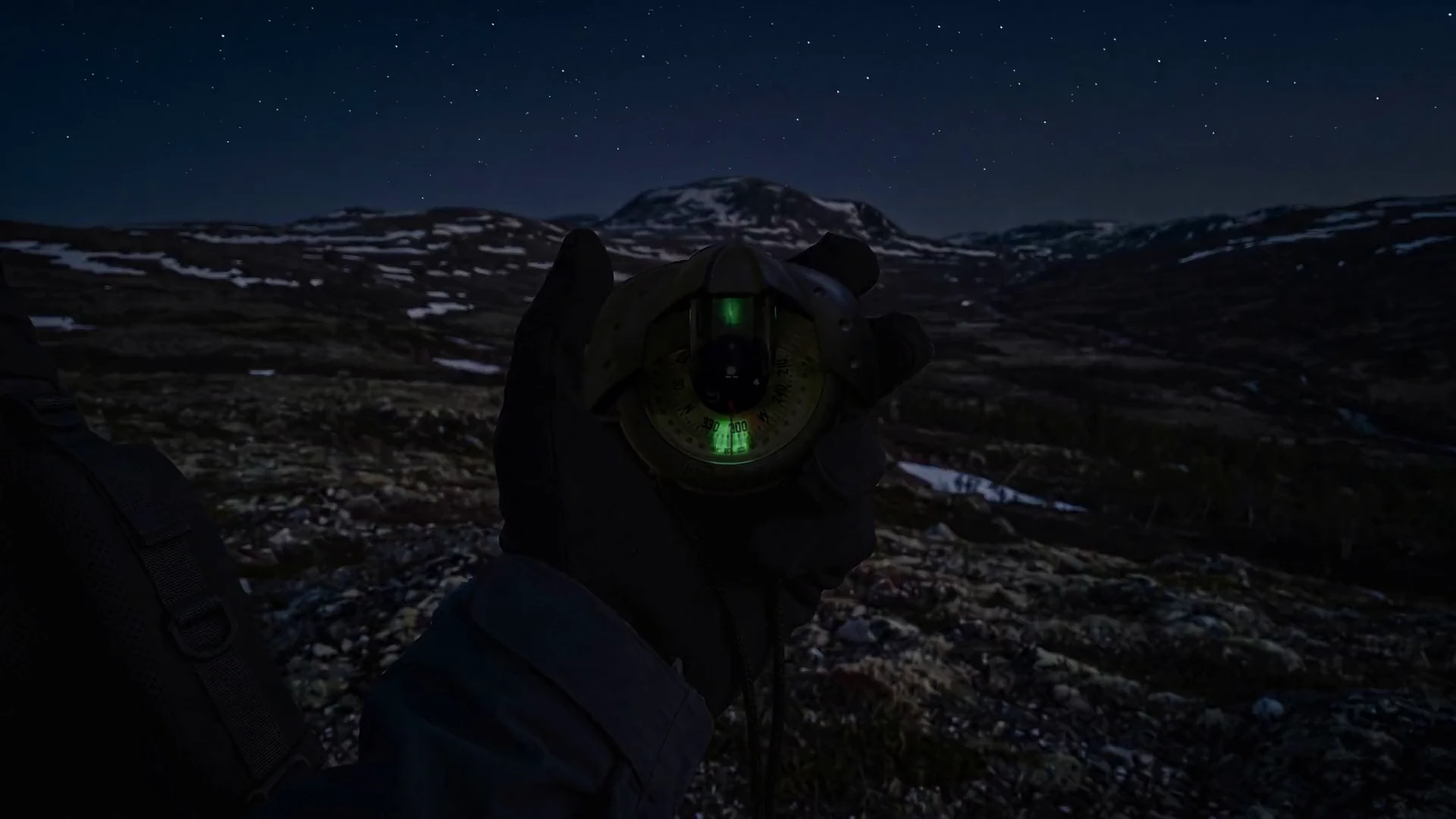
How to get the most from the light
Give your eyes 20 to 30 minutes
After 7 to 10 minutes the rods take over. That is when the big gain comes.
Avoid white light and screens
A few seconds of bright light takes away much of the adaptation, and it takes a long time to get it back.
Need a lamp? Use deep red light
To read a map or handle equipment, use a head torch or torch with deep red light on its lowest setting. The rods see almost no deep red and barely lose their adaptation.
Choose green when it needs to be seen most
Green gives the most light of our nine colours.
Frequently asked questions
Why does the tritium light look fainter right after I switch off the lights?
Because your eyes are still set for the light you just had. During the first minutes in the dark they become more sensitive, and after 20 to 30 minutes the same light looks clear.
Does the light get brighter after a while?
No. The light source glows just as brightly all the time, around the clock. It is your eyes that become more sensitive. Over many years the light slowly becomes fainter, because tritium halves in about 12 years.
How long do I need to wait?
The biggest difference comes after 7 to 10 minutes, when the rods take over. After 20 to 30 minutes your eyes are almost fully adapted.
Read more
How tritium light works Markers Compasses Frequently asked questions
Sources: CIE 191:2010 (the limits for day, twilight and night vision), AMS Glossary of Meteorology and Webvision (dark adaptation). The brightness of the marker and the colours are Emitrix’s own figures.