
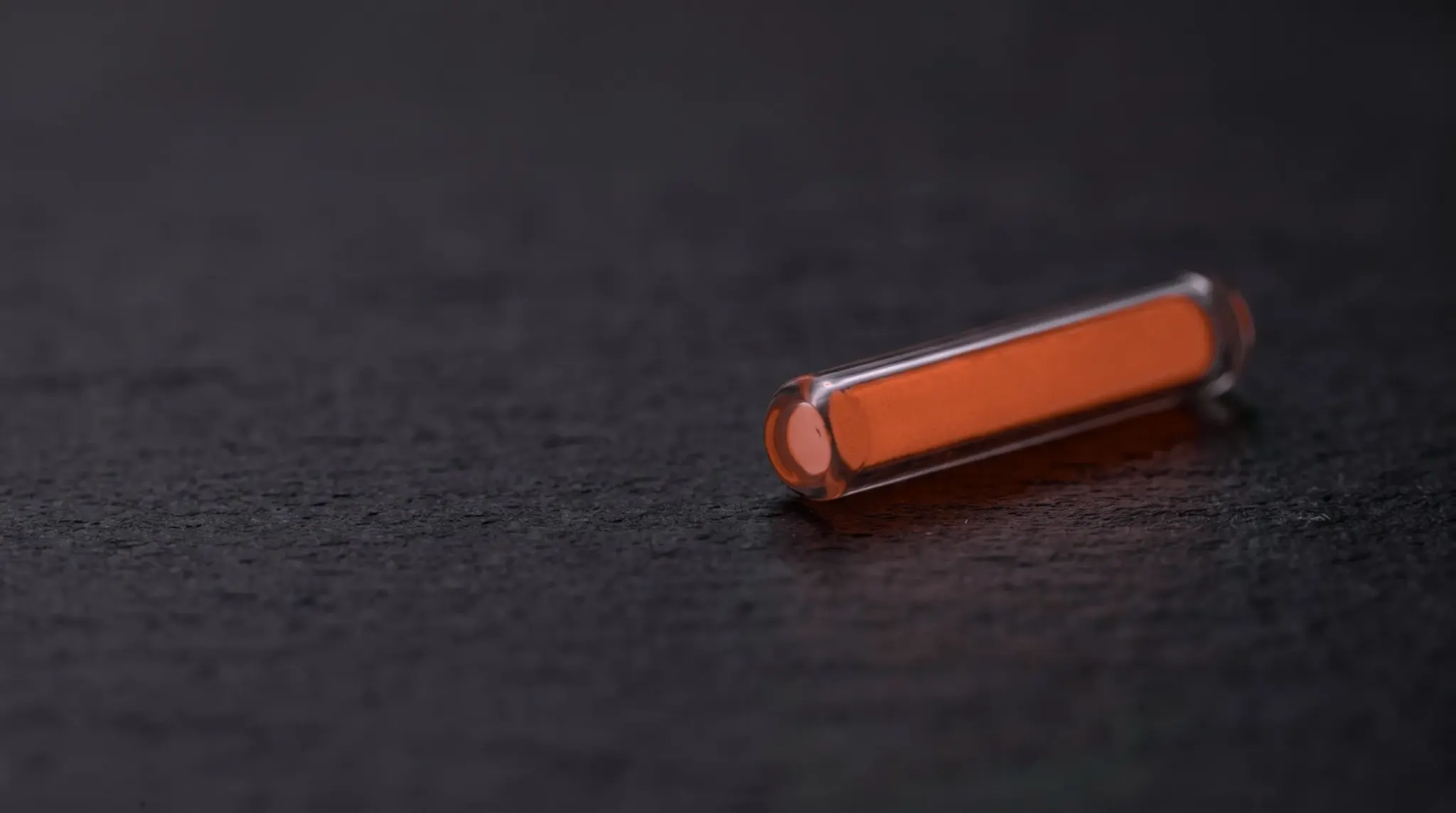
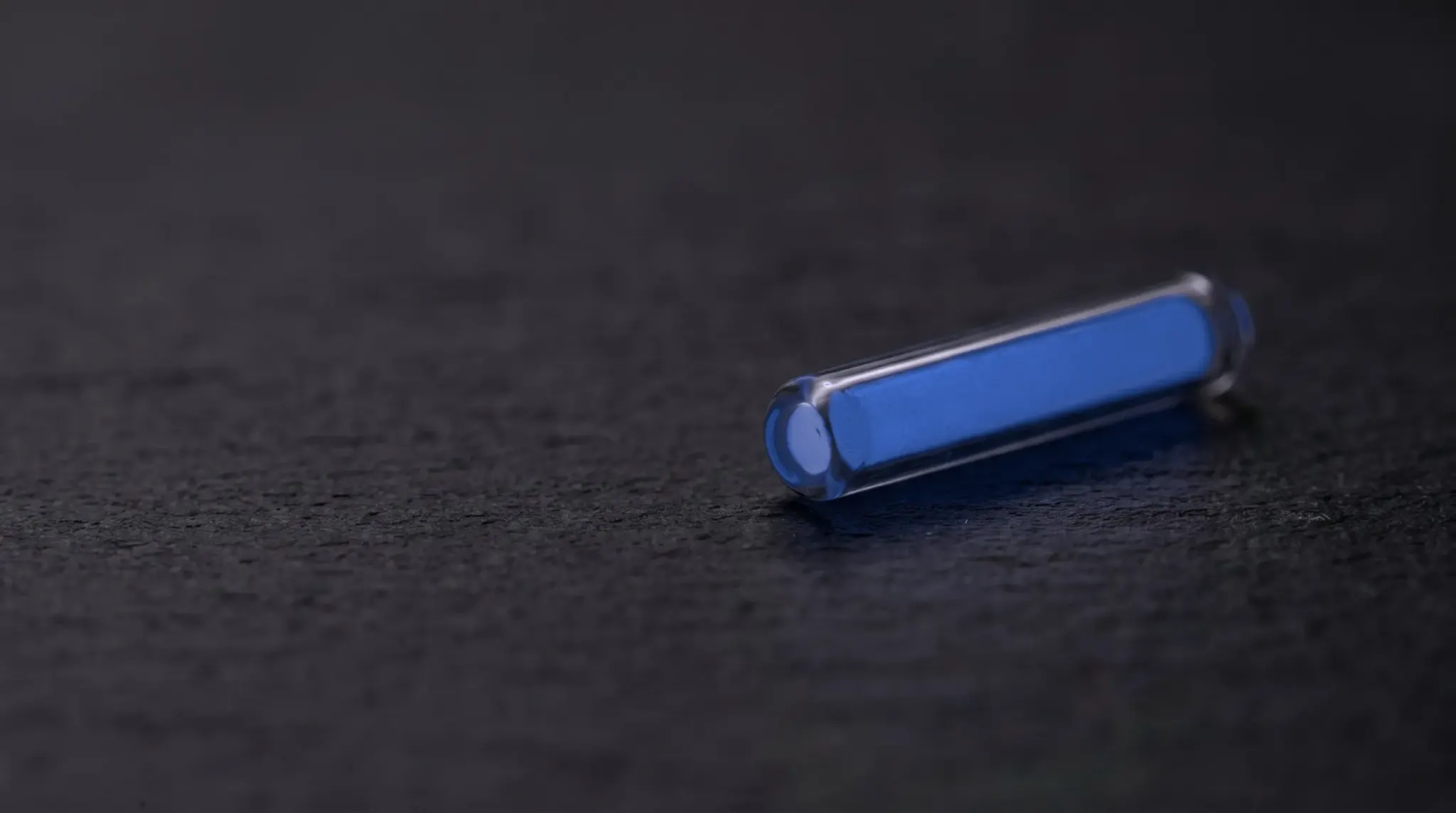
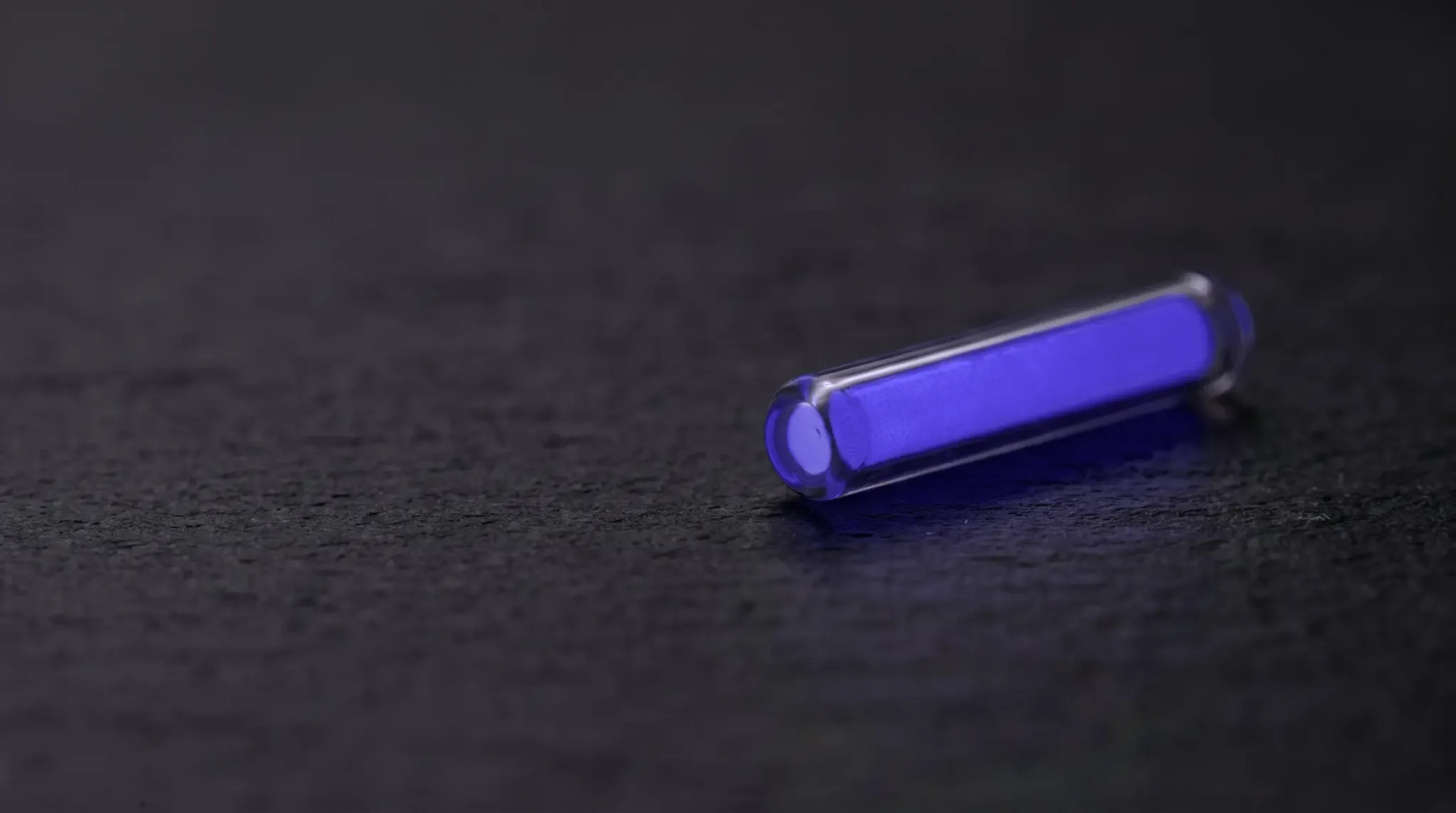
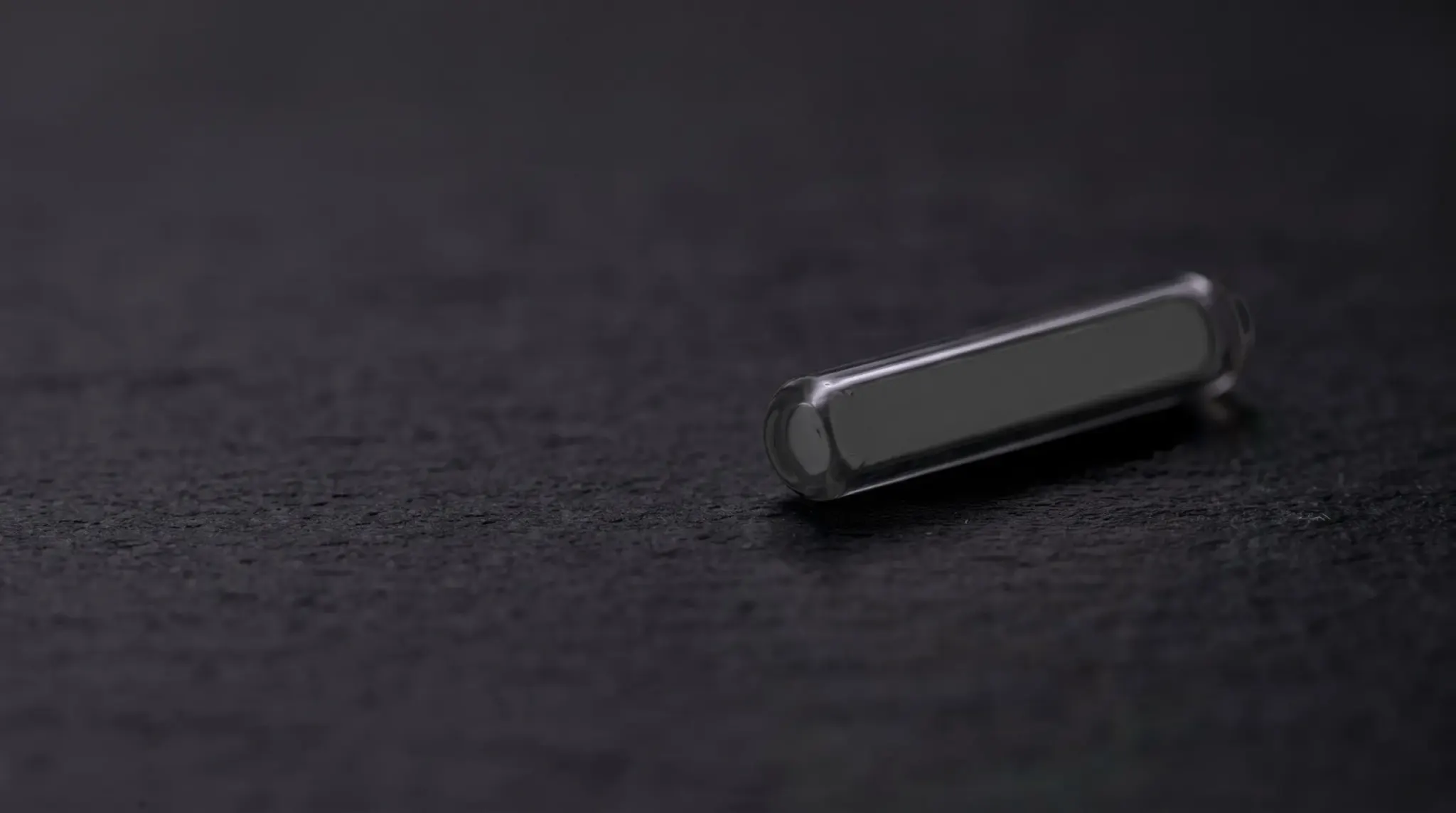

Light that glows for years, with no power at all.
Small sealed glass capsules in which tritium gas makes a thin layer of phosphor glow around the clock. Emitrix is Sweden’s leading company in the development and implementation of tritium light sources, delivering self-luminous, maintenance-free and reliable lighting solutions for demanding environments.
-
Switch off the light
It keeps glowing.
No power and no batteries. The light comes from inside the capsule.
-
01The glass
A sealed glass tube
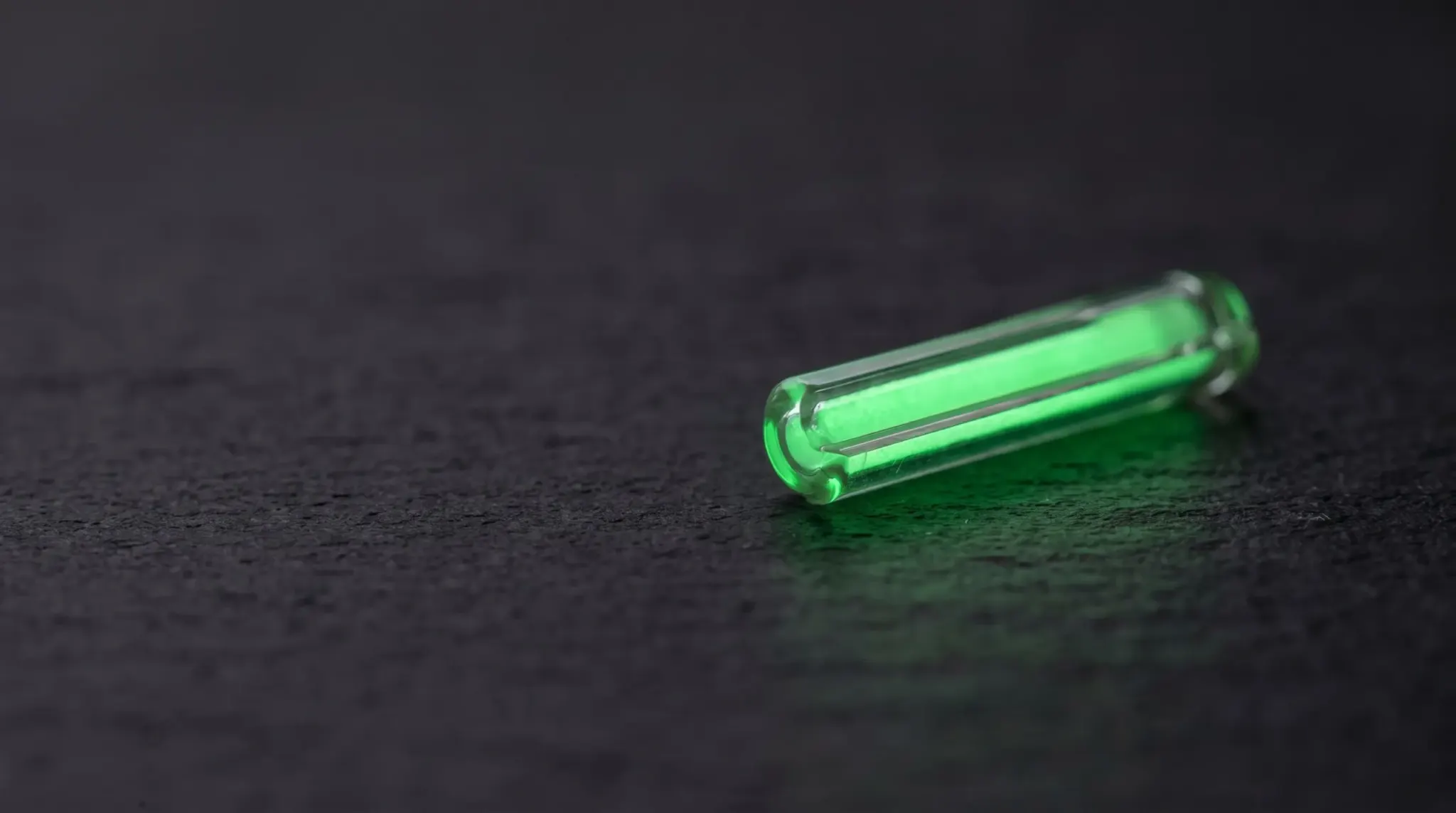
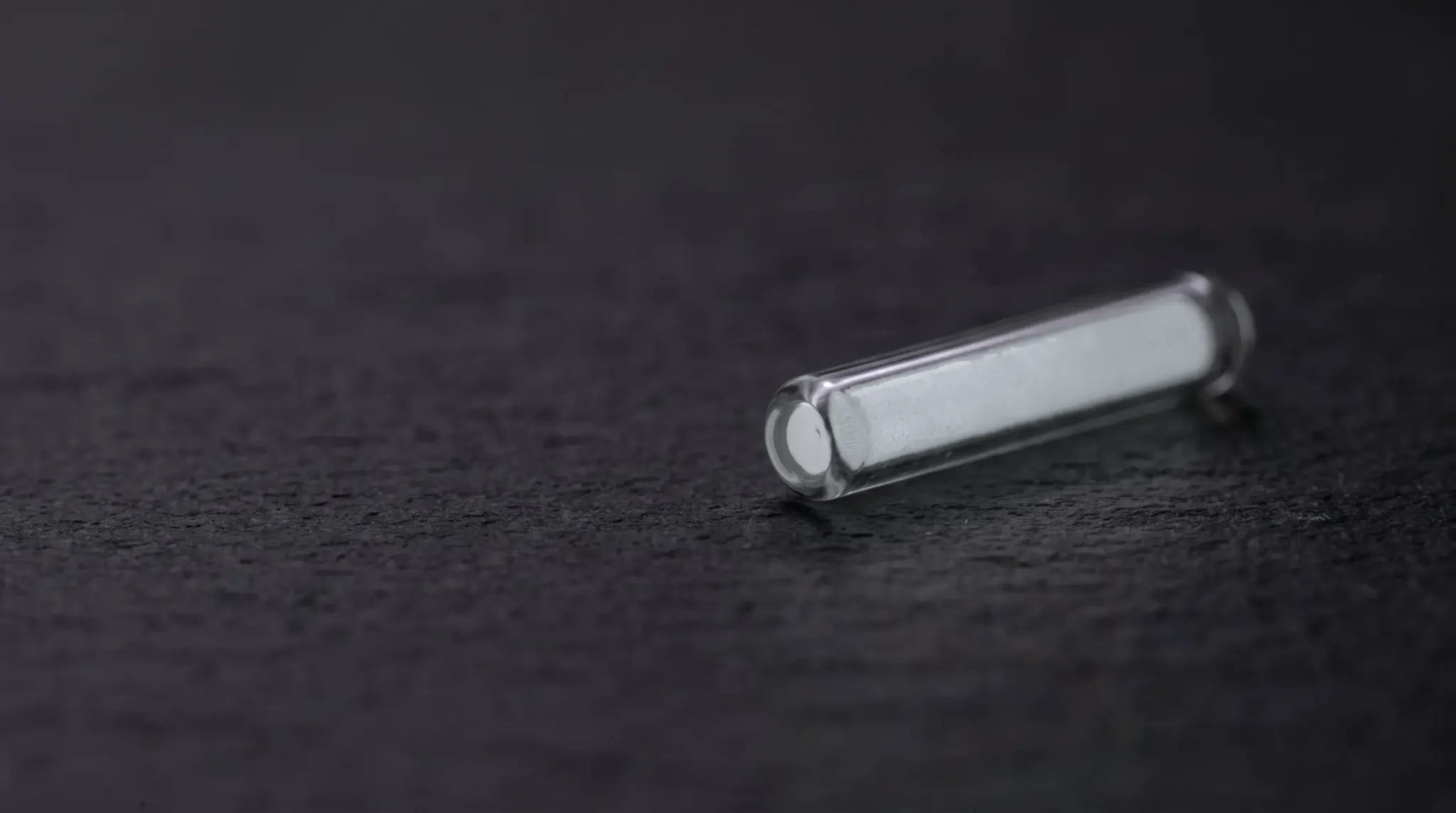
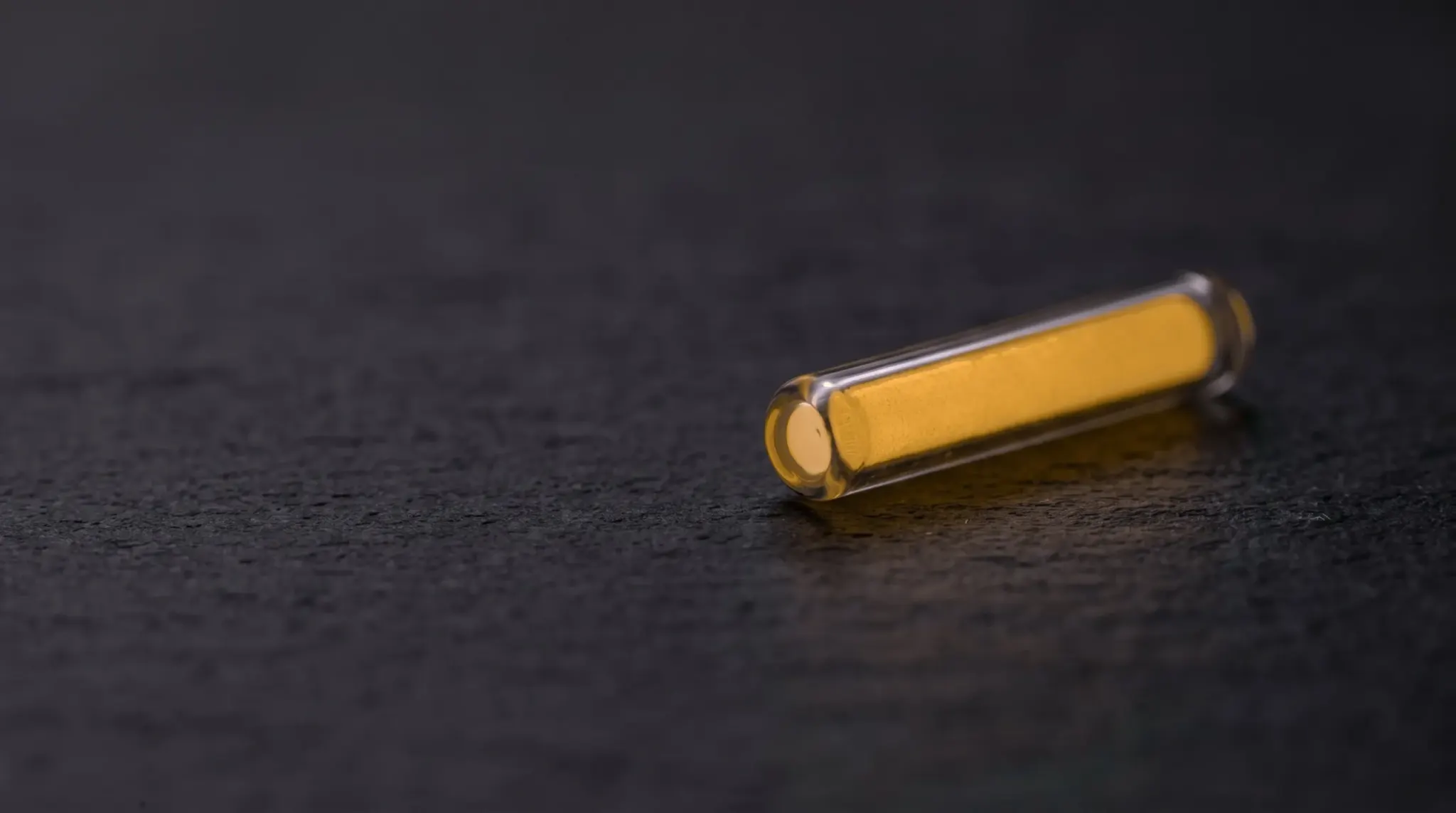
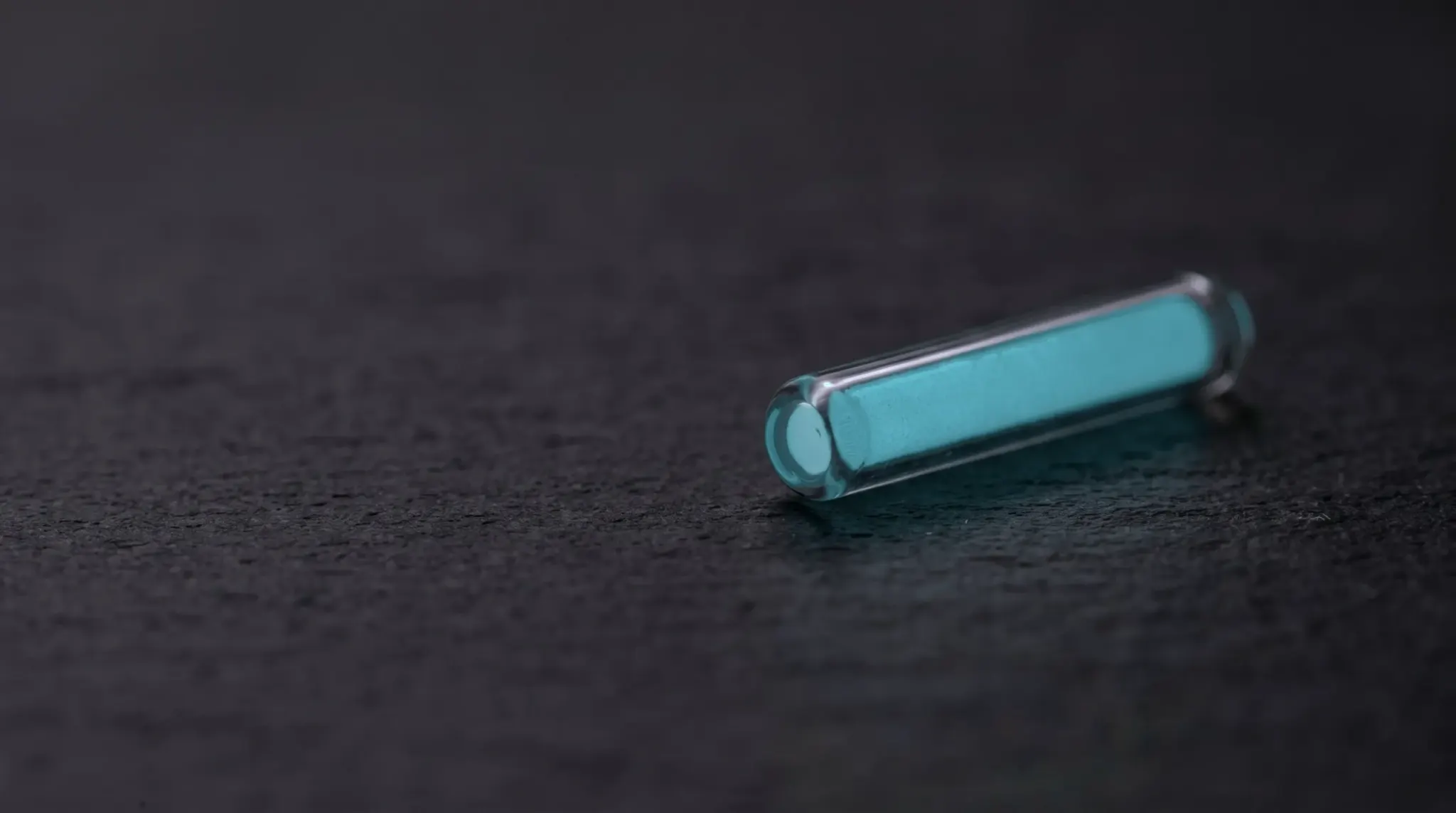
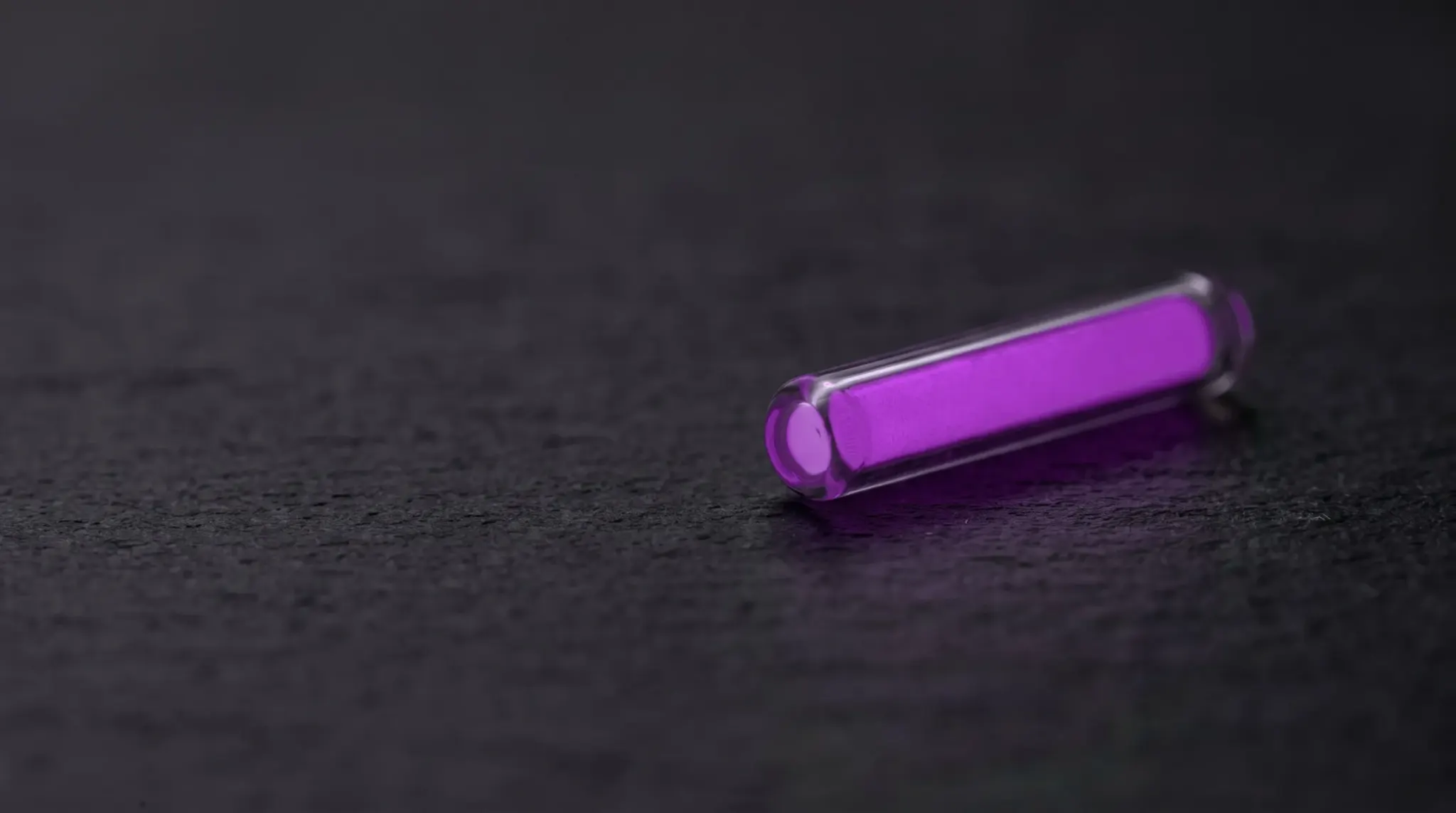
The glass tubes are made from 0.3 to 5 mm in diameter, in any length. Shown here is a tritium light source 1.5 mm in diameter and 6 mm long. The glass is melted shut at both ends.
-
02The phosphor
A thin layer on the inside
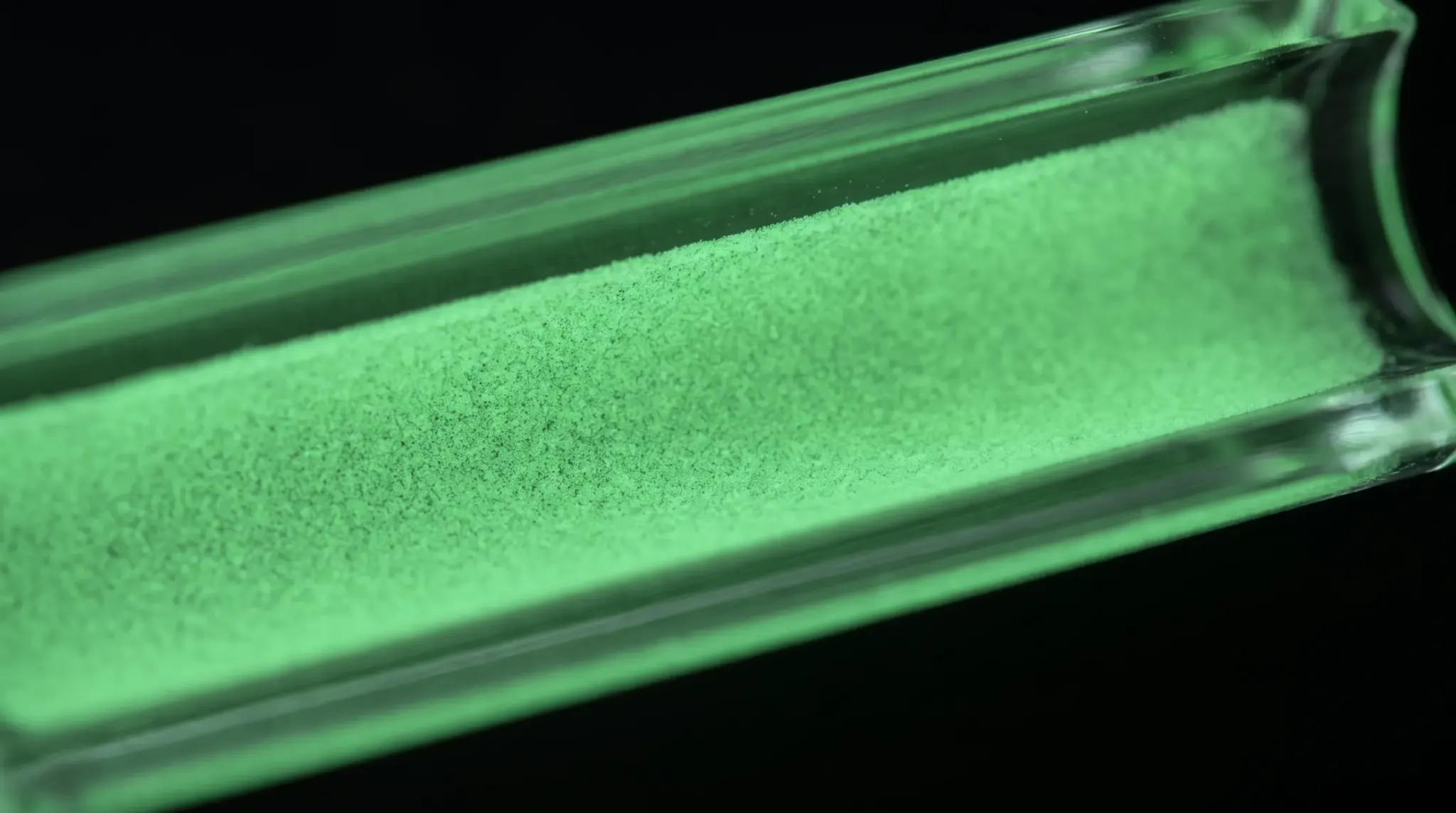
The inside of the glass is coated with phosphor. The phosphor is what glows, and it decides the colour.
-
03Tritium (³H), a hydrogen isotope
Inside the tube: tritium gas
Tritium is a radioactive form of hydrogen. When a tritium nucleus decays, it turns into helium and sends out an electron.
-
04From electron to light
Each hit makes a tiny flash
The electron stops in the phosphor. Only part of its energy becomes light. The rest becomes heat, far too little to notice.
-
05An even glow
Up to a billion flashes a second
A tube like this has an activity below 1 GBq: fewer than a billion decays per second. The flashes merge into an even glow.
-
06Phosphor and glass
The light gets out. The electrons do not.
Almost all the electrons stop in the phosphor, within a thousandth of a millimetre. The glass is hundreds of times thicker, so none of them get through.
-
07No power
Glows around the clock, for years
After about 12 years half the tritium is gone and the light is fainter.
-
Colours
Same technology. Nine colours.
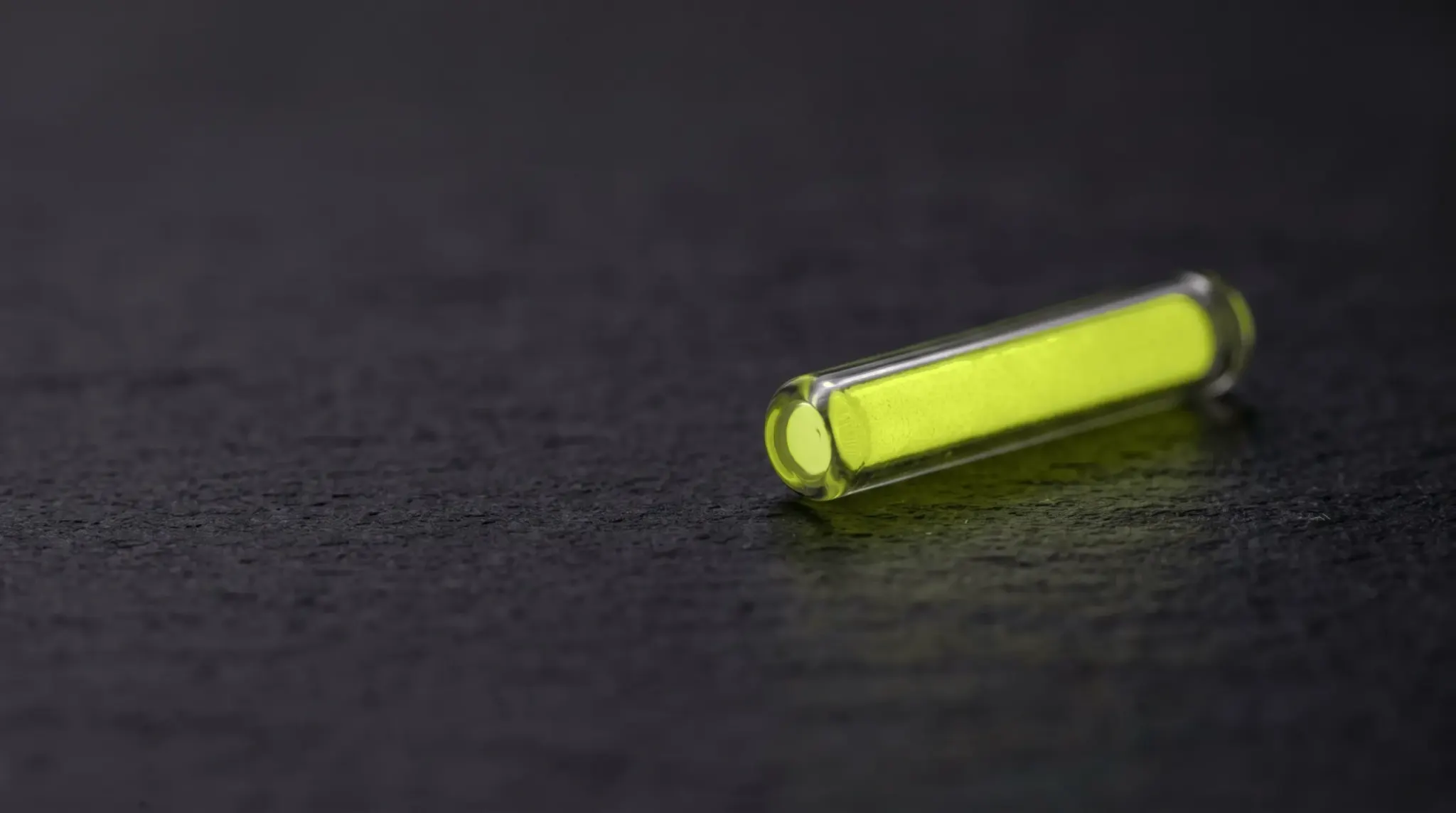
The phosphor sets the colour. At the same size and tritium fill, green gives the most light: its phosphor is efficient and the eye is most sensitive to green.
-
Infrared
Invisible to the eye. Clear through night vision.
Infrared light sources emit in the near infrared. In practice they are visible only through night vision.
Illustration: the capsule is shown cut open and time greatly slowed down. The electrons are drawn; they are far too small to see.
Applications
One light source. Three uses.
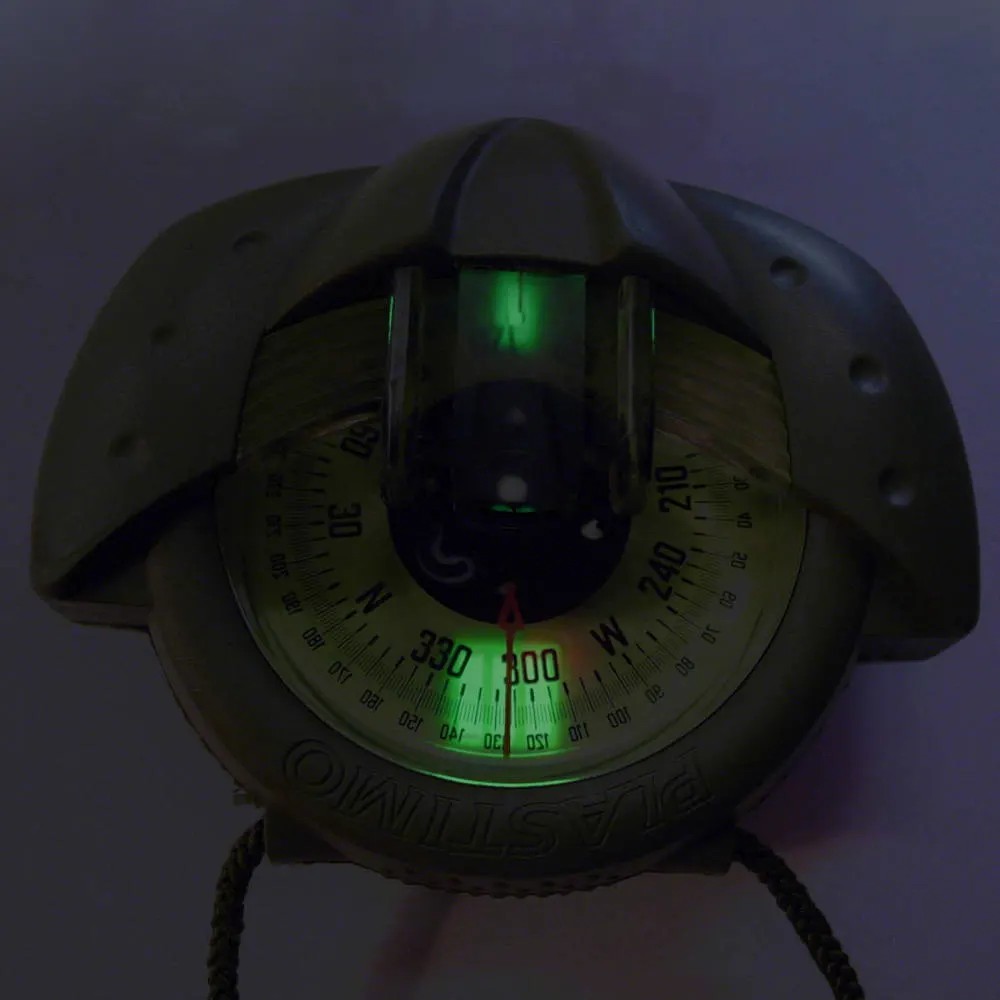
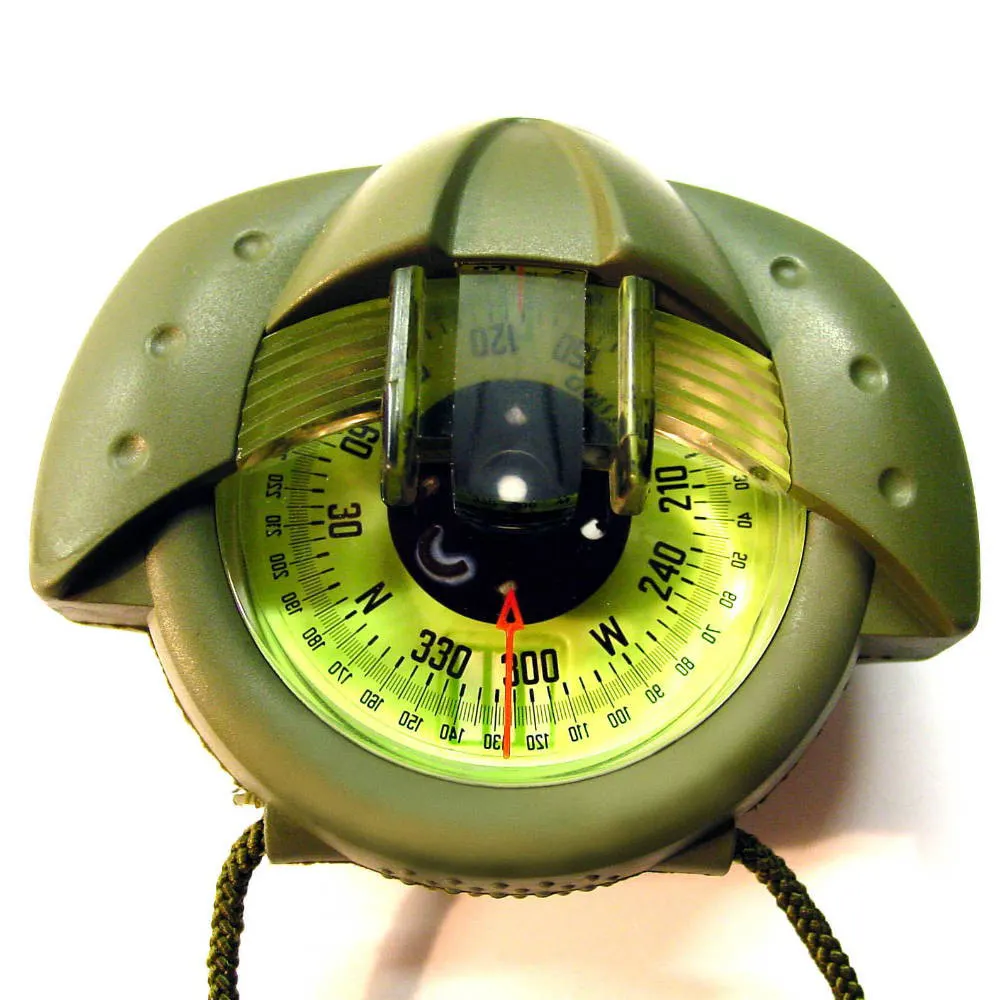
Outdoors and everyday
Blue hour in the Swedish mountains.
Night falls. The compass keeps glowing.
Faint, steady light for years. No power, no batteries.


Defence and emergency services
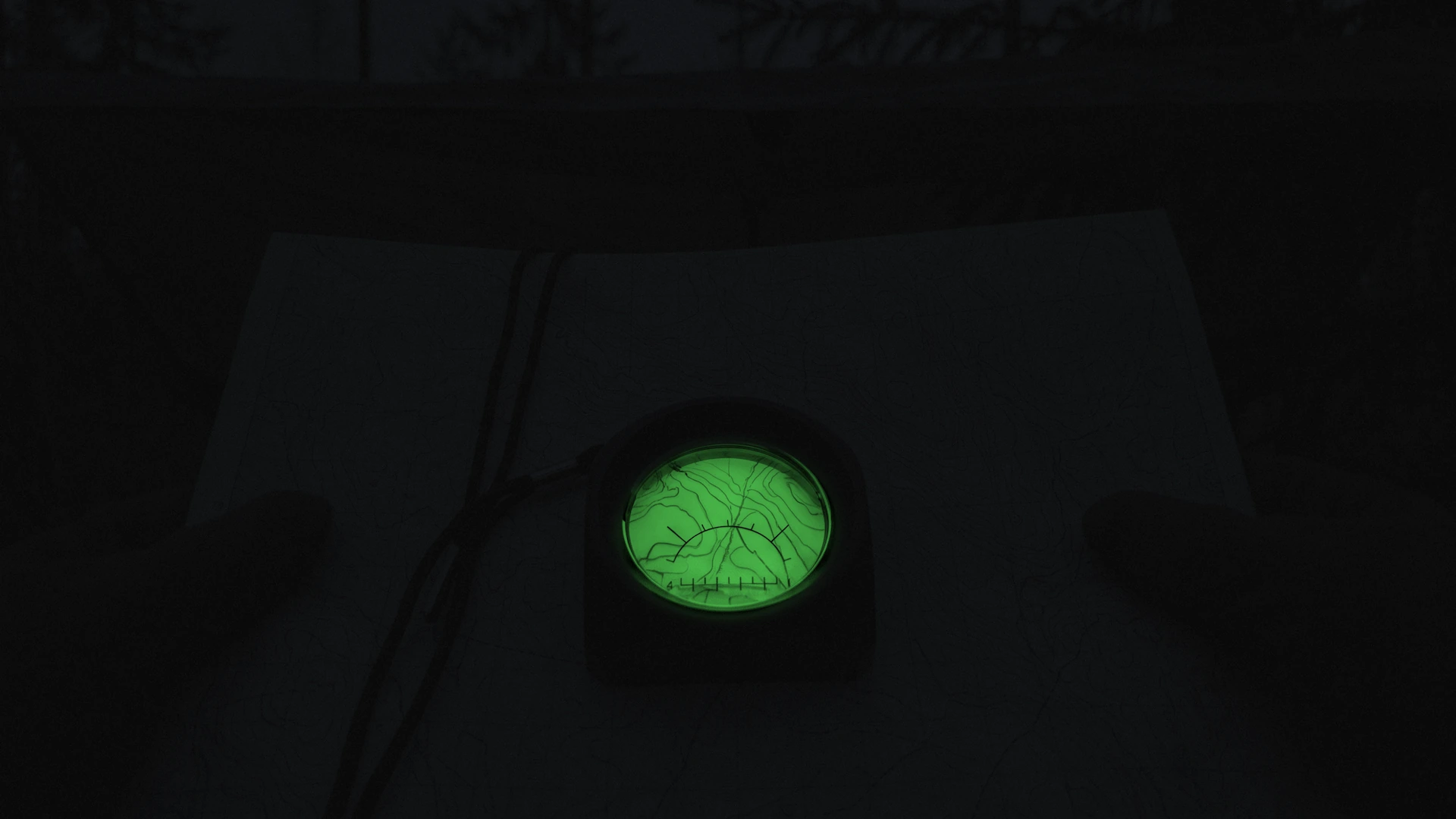
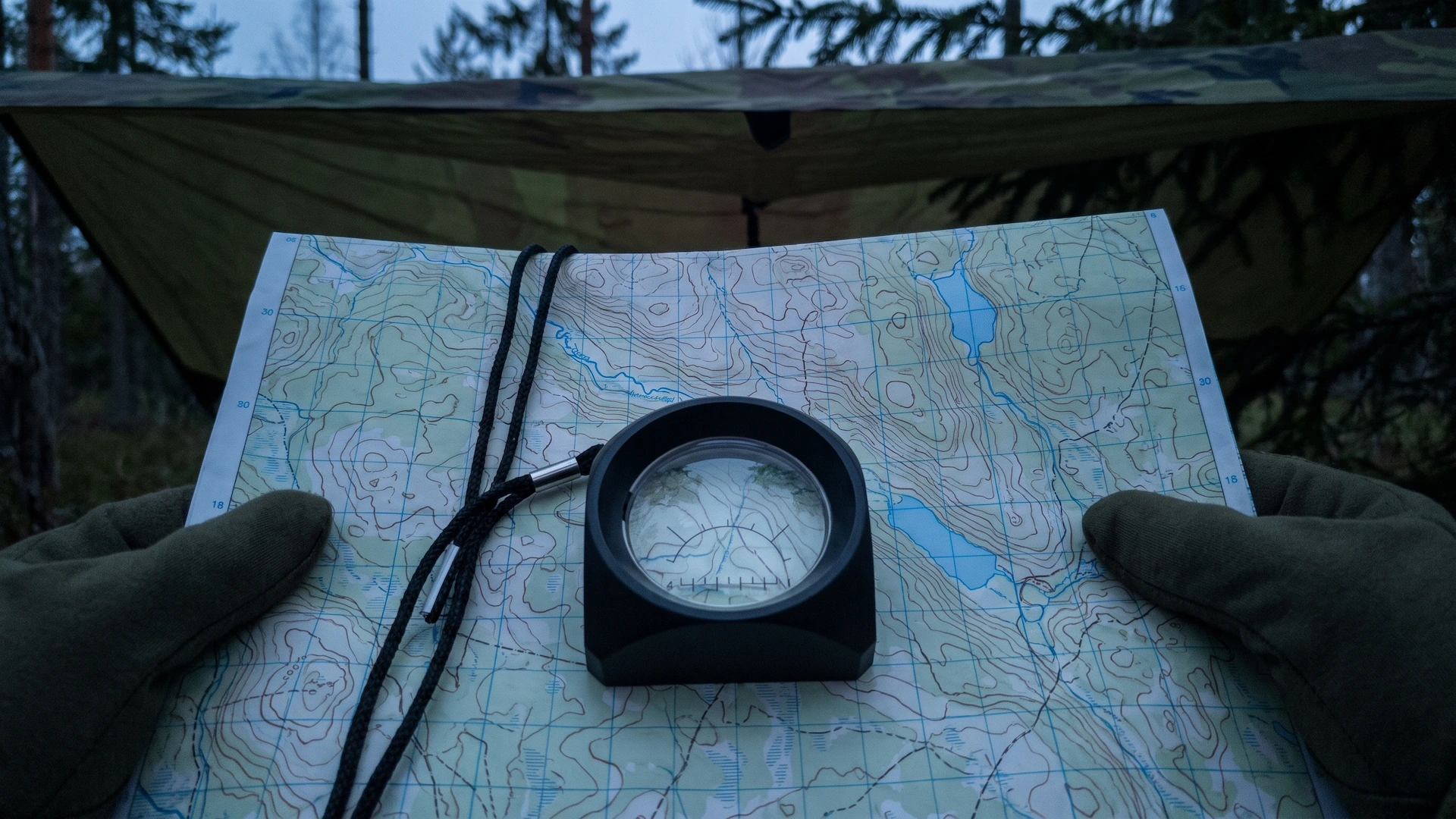
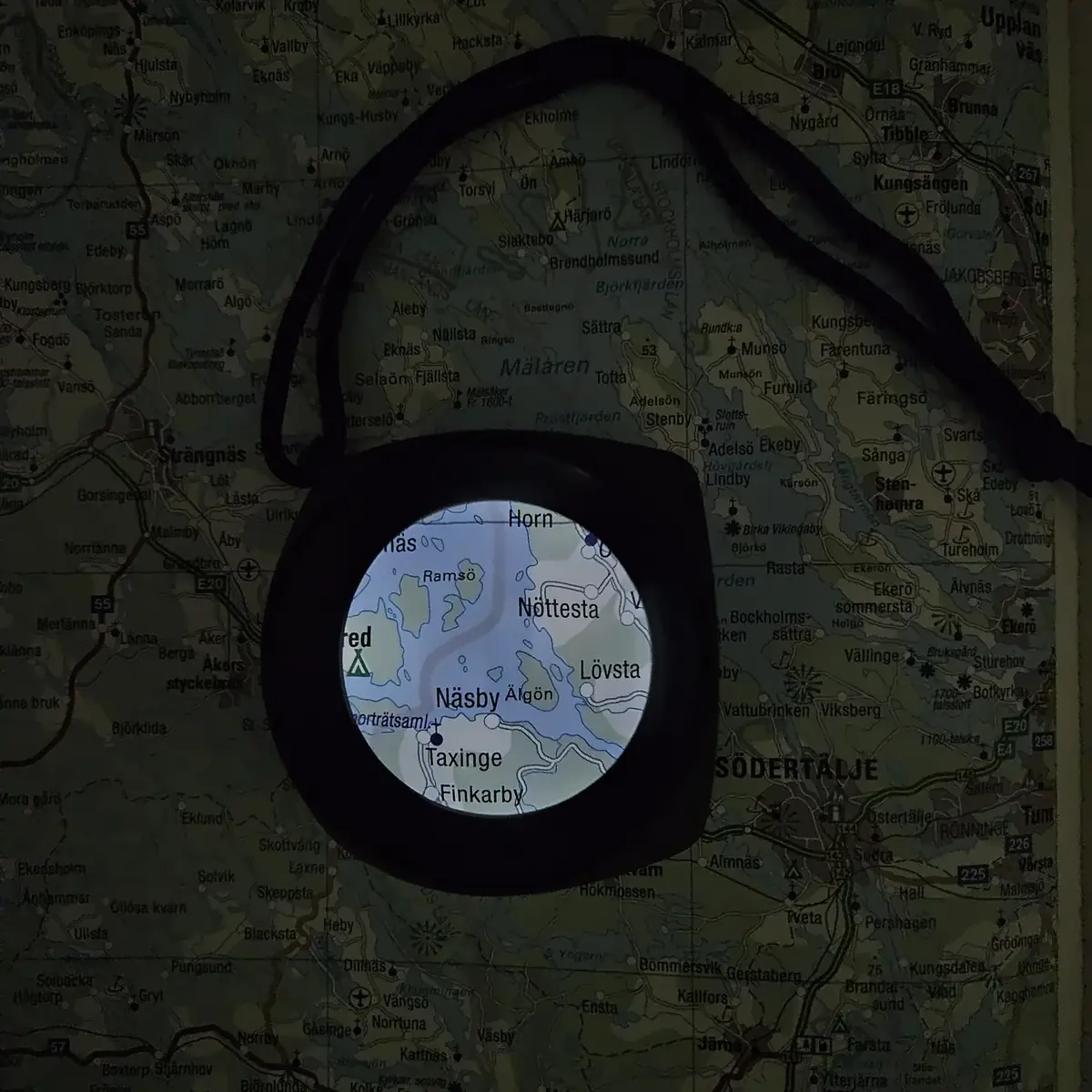
Dusk under the tarp.
Night. The only light is under the lens.
The same night, seen through night vision.
The light does not dazzle the person using it. But anyone with night vision sees it clearly. Infrared light sources cannot be seen with the naked eye, only through night vision.
Industry
A workshop. The power is on.
Power cut. The sign keeps glowing.
No cables, no electrical components. The sign marks the exit.



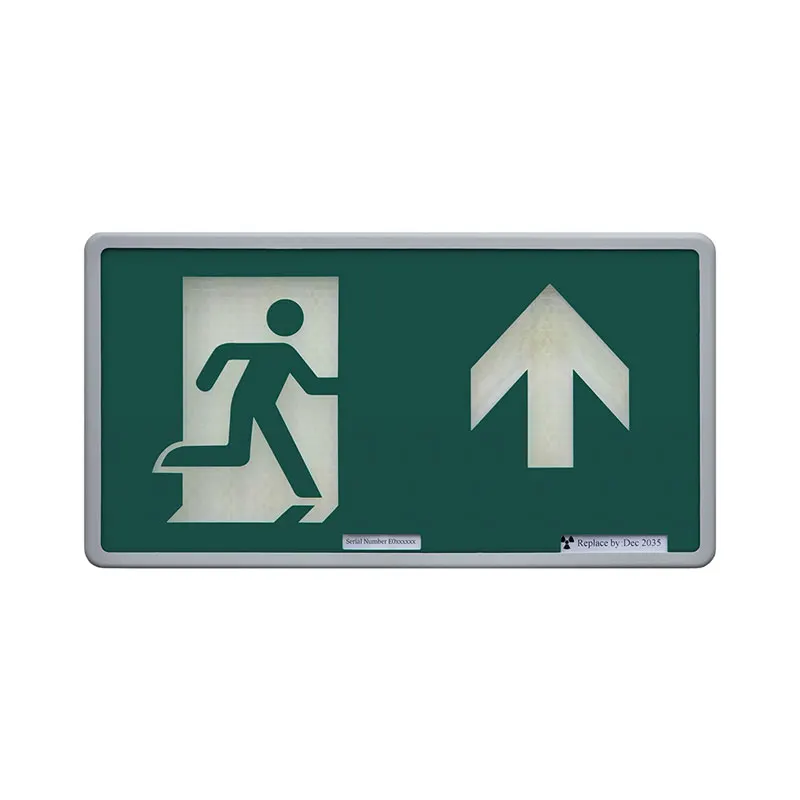
Darkness falls. The light remains.
Faint and steady, for years, without power or batteries.
Development
Need something of your own?
We develop products with tritium light, from idea and prototype to production, in our own laboratory.
The products in the shop are a small part of what can be built with tritium light. We develop new solutions for defence, rescue services, industry and the outdoors, and adapt the light source to each use.
GTLS
Design and development of light sources
Light sources to your requirements for shape, size, colour and brightness.
GTLD
Product development
New products with tritium light sources, from idea and prototype to production.
From idea to quality control
- 1
Idea
A need in defence, rescue services, industry or outdoor use.
- 2
Research
We study how tritium light can solve it.
- 3
Design
A new product, or a modified existing one. The light source is adapted to the purpose.
- 4
Prototype
Prototypes are made and reviewed before production.
- 5
Production
Manufacturing from the approved prototype.
- 6
Quality control
Checked against requirements and specification.
Tell us about the use, the quantity and the requirements. We also help with the licence application to SSM.
Is it dangerous?
No, not in normal use. The beta radiation from tritium is so weak that it is stopped by the glass and does not penetrate the skin. Even if a light source were to break in an accident, it would do no harm, because the gas quickly disperses into the air.
| What | mSv | Source |
|---|---|---|
| All the light sources in a wristwatch are completely destroyed | 0.004 | Emitrix |
| Eating one banana every day for a year | 0.04 | Emitrix |
| Flying 6,000 kilometres | 0.06 | Emitrix |
| All the light sources in an exit sign are completely destroyed | 0.3 | Emitrix |
| Background radiation for a year, according to SSM | 2.0 | Emitrix |
| Smoking 20 cigarettes a day for a year | 8.8 | Emitrix |
| One CT scan a year | 10 to 25 | Emitrix |
Buying and licences
Can I buy one?
Yes, some products can be bought without a licence. Others require a licence from the Swedish Radiation Safety Authority (SSM).
- No licence needed
- Tritium Marker Small and LitenX, the Adhesive Marker and the Stake Marker: yes, without a licence and in any quantity, for individuals and organisations alike. They are finished products (GTLD), not loose light sources.
- No licence needed for private use
- Our hand bearing compasses and sights: yes, without a licence for private use.
- No licence needed up to 1 GBq
- Loose light sources: yes, at most 1 GBq in total.
- Requires a licence from SSM
- Exit signs, map readers, the torch and larger markers: require a licence from the Swedish Radiation Safety Authority (SSM). We help you apply.
- Ask us about licensing
- Companies and authorities: request a quote and we will check what applies.
- 1Order
- 2We check the licence where needed
- 3Stock products ship as ADR parcels within 1-3 working days
- 4You must be 18 or older
News
Defence Expo Sweden 2026
We exhibited at Defence Expo Sweden 2026 (stand N62).
Brochures and datasheets
Download the brochure and the datasheets for light sources, compass, exit sign and map reader. Go to downloads
Questions about products, licences or custom orders?
Call +46 8 88 11 88 or email mail@emitrix.se. Monday to Friday 08:30-16:30.